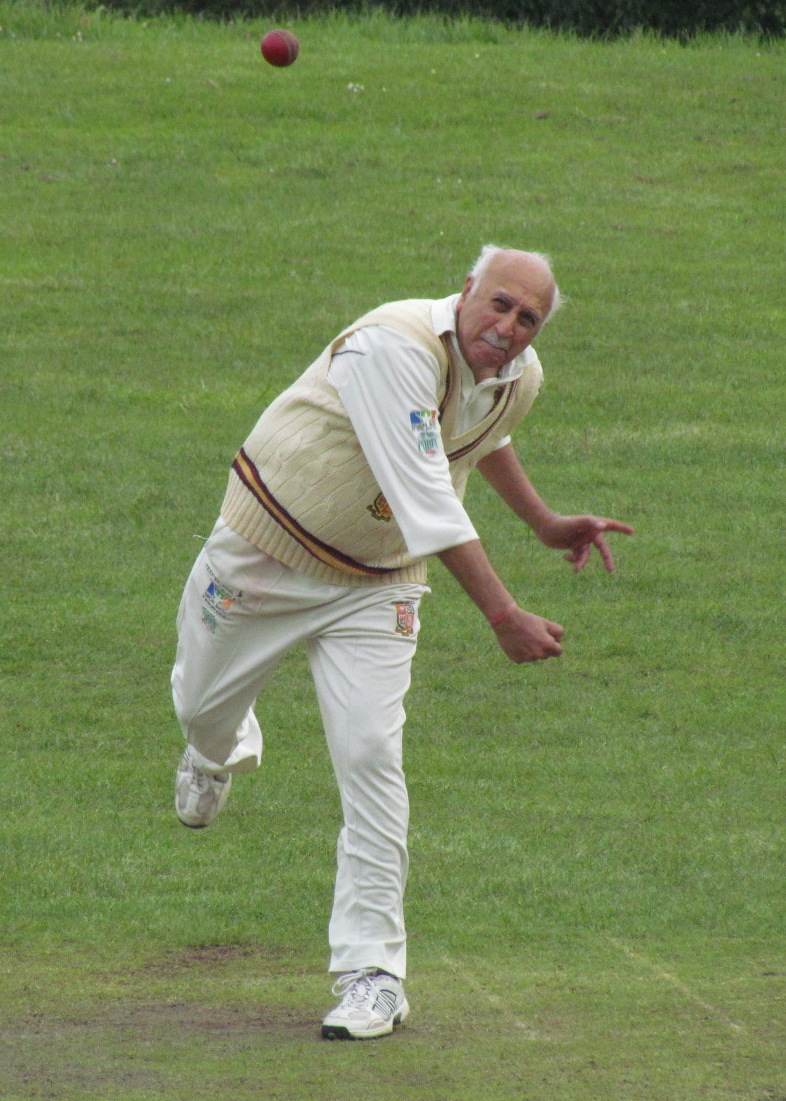
 It all looks so innocuous as the batsman sees this white-haired gentleman with a well-rounded beer belly mark his run up and then trundle seven paces towards him. Having seen off the pacemen he is ready to launch into attack mode against the slower bowlers. The delivery action is smooth and the ball sails towards the unsuspecting batsman. There is ever so slight a movement in the ball’s trajectory before pitching just outside the off stump, then it alters its course, again ever so marginally, to nip past the bat. Ball after ball lands in the same area always with a minor change of angle, pace and deviation requiring the batsman hurriedly to adjust. Runs dry up forcing a frustrated slog to be caught in the deep, or an indifferent prod down the wrong line to be comprehensively bowled.
That is the art of the dibbly-dobbly, defined as gentle, slow-medium pace bowling relying on seam movement and precise length, not sheer speed. Batsmen find it difficult to make attacking shots due to lack of pace and the consistent nagging lines, forcing errors or slow scoring.
Sunil Amar was a leading exponent of this craft. Over the 50 years with the Club he has ‘trundled’ in with his subtle variations and caused consternation. He would usually pick up two to three wickets in the middle order and reduce the run rate to a crawl. In his long career he has taken 477 wickets at an average of 20.71 conceding only 4 runs an over. His biggest haul was 7/27 in just 7 overs on a tour to Menorca in 2007. One remarkable statistic of which Sunil was always proud was that he has only bowled 5 no-balls, i.e., one every 500 overs!
We salute you, Sunil, and we will miss you enormously both on the cricket field and as an endearing friend.
– San Gore
 KENSINGTON CRICKET CLUB